

Chris Adamopoulos
The 1976 Summer Olympics, held in Montreal, Canada, were marked by historic athleticachievements, political boycotts, and significant financial challenges.
For those of us that witnessed the Games 50 years ago, it feels like it was only yesterday that we were celebrating the grandest sporting spectacle on the planet. The 1976 Summer Olympics were held from July 17 to August 1, featuring historic performances, and plenty of controversy.
Selection and Planning
Montreal was awarded the 1976 Summer Olympics at the 69th International Olympic committee(IOC) Session in Amsterdam on May 12, 1970, winning over Moscow and Los Angeles after Los Angeles was eliminated in the first round of voting and Montreal prevailed in the second round due to support from smaller and neutral countries.
This marked the first time Canada hosted the Summer Olympics, with Toronto hosting the Summer Paralympics the same year. Montreal’s bid was the city’s sixth attempt, following previous initiatives for the 1932, 1936, 1944, 1956, and 1972 Games. Mayor Jean Drapeau played a central role in securing the Games, inspired by a visit to the IOC offices in Lausanne in 1963.
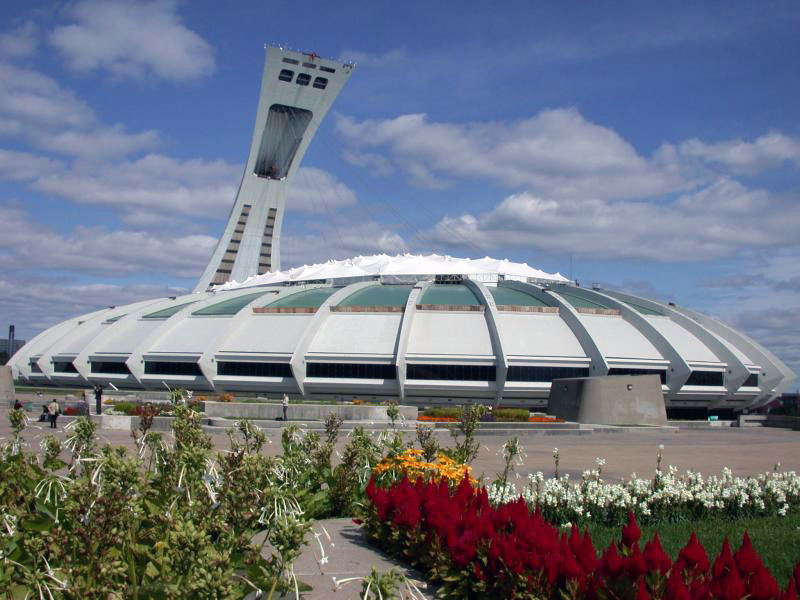
Construction of the Olympic Stadium – designed by French architect Roger Taillibert – began in earnest but cost overruns were amplified by labor union strikes. In addition, tight security at the Montréal Olympics cost $100 million following the Munich Massacre at the 1972 Summer Olympics. Despite these major economic and logistic challenges, the Olympic facilities became Montréal landmarks and many today are still used for training and competition.
Political Context and Boycotts
The Games were heavily affected by political tensions. Twenty-six countries, mostly from Africa, boycotted the Olympics to protest the IOC’s refusal to ban New Zealand after its rugby team toured apartheid South Africa. Taiwan also boycotted after Canada, under pressure from the People’s Republic of China, barred it from competing under the name “Republic of China”. These boycotts highlighted the intersection of international politics and sport during the Cold War era.
Montreal Welcomed the World
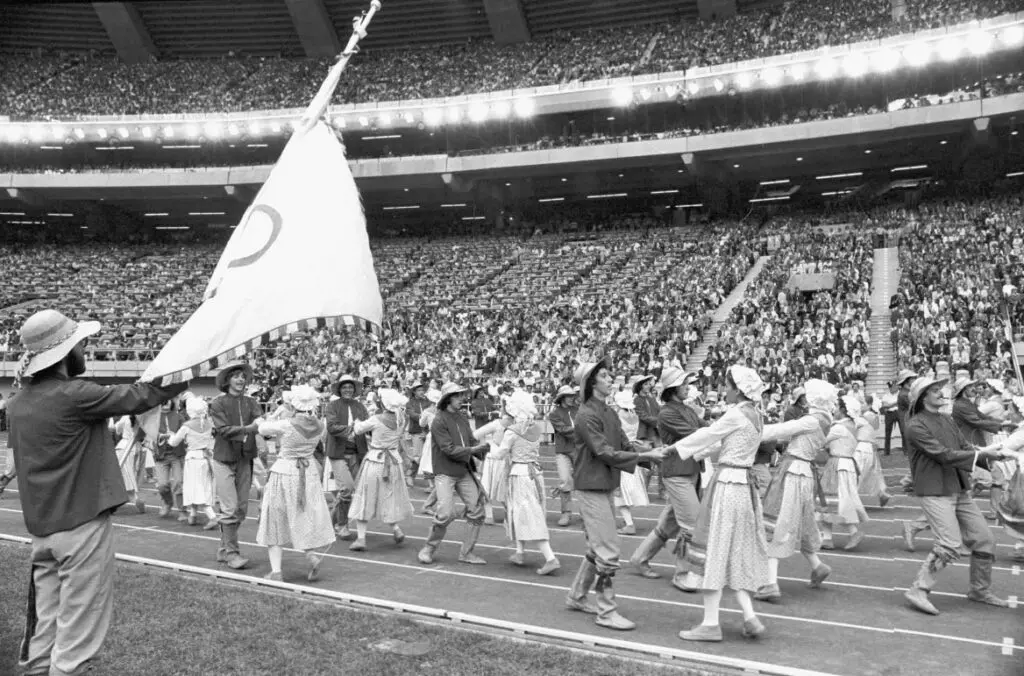
The opening ceremony of the Montréal Olympics was held at the incomplete Olympic Stadium before 73,000 spectators including Canadian Head of State Queen Elizabeth in the Royal Box.
The Queen was accompanied by other Royals, including Princess Anne who was also an equestrian competing at the Games for the British equestrian team. Other dignitaries in attendance included Canadian Prime Minister Pierre Elliott Trudeau.
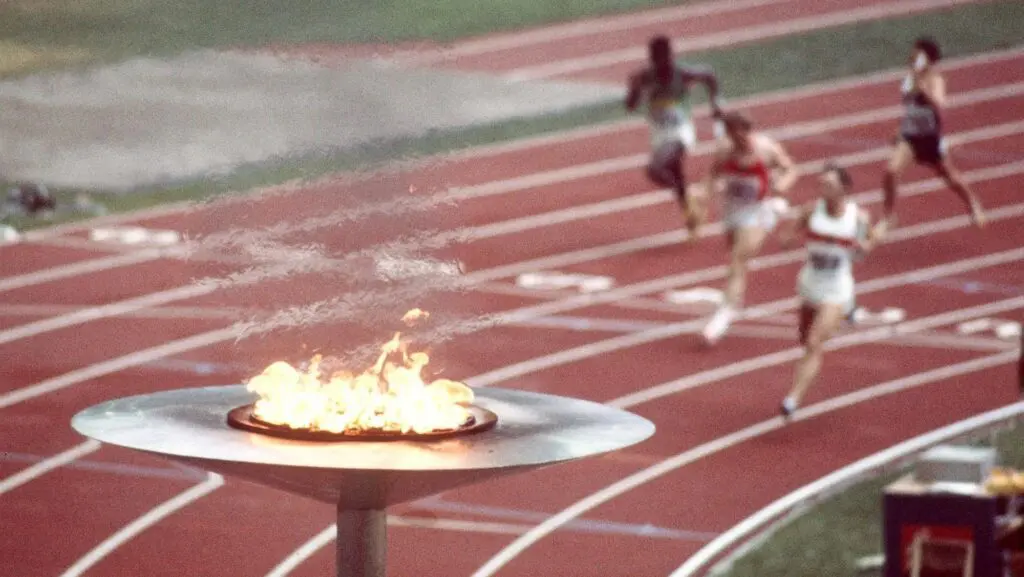
The Games also saw the first use of an artificial hockey pitch (artificial grass), and innovative technology for the Olympic Torch Relay, which transmitted the Olympic Flame via satellite from Ancient Olympia to Ottawa.
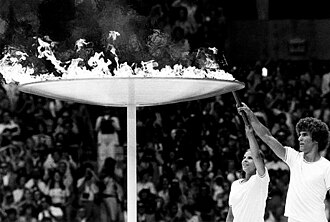
An estimated half-billion people worldwide watched the opening ceremony on television. During the ceremony, much of the music performed for the parade was arranged by Montréal jazz icon Vic Vogel who grew up during Montréal’s fabled Sin-City era when the city was home to one of the hottest jazz scenes in the world. During the Games, many Olympic delegations partied at The Lime Light, the iconic disco that rivaled Studio 54 in New York City and helped establish Montréal as disco’s Second City.
Notable Athletes and Performances
The Montreal Games featured over 6,024 athletes from 92 countries, of which 1,246 were women. Almost all athletes stayed at the pyramid-style twin-tower Olympic Village which housed 980 apartments.
The pyramids still exist today as an apartment complex. Romanian gymnast Nadia Comăneci became a global sensation by earning the first-ever perfect 10 in Olympic gymnastics, ultimately achieving seven perfect scores. American decathlete, poster boy and athletic idol, Bruce Jenner (now Caitlyn Jenner) set a world-record on his way to winning the gold medal in the decathlon.
Other highlights included Cuba’s Alberto Juantorena, with his incredible stride, winning both the 400m and 800m races, becoming the first person to do this in the same Olympics. There was also the debut of women’s basketball, rowing, and team handball events.
Soviet weightlifter Vasily Alekseyev won gold; Trinidad and Tobago track star Hasely Crawford took the gold for winning the 100-metre final in a time of 10.06; the American dream-team of Sugar Ray Leonard, Leon Spinks, Michael Spinks, Leo Randolph and Howard Davis Jr. won gold medals in boxing; and 16-year-old future gold medalist Greg Louganis won silver for the 10m Platform event in Men’s Diving.
Incredible performances were also achieved by Finland’s Lasse Viren, New Zealand’s Johnny Walker and of course legendary American 400m hurdler, Edwin Moses.
Other memorable champions included the Japanese women’s volleyball team who won all their matches in straight sets. Waldemar Cierpinski, from East Germany, won the rain-soaked men’s marathon over American icons Frank Shorter and Bill Rodgers. And Canadian Greg Joy gave the home town fans something to cheer about when he finished second in the men’s high jump in the Olympic Stadium.
There were 198 medal events. The Soviet Union won 49 gold and 125 overall medals, finishing first in the medal standings. Canada finished with five silver and six bronze medals.
Financial and Organizational Challenges
The Montreal Olympics were notorious for their financial mismanagement. The Oxford Olympics Study estimates the cost at US$6.1 billion (2015 dollars), with a record-breaking cost overrun of 720%.
Many venues, including the velodrome, were completed late or over budget, and some became underutilized “white elephants” after the Games. The financial burden led to decades of debt for the citizens of Montreal and Canada, earning the Games the nickname “the billion-dollar circus”.
Legacy
Despite the financial and political challenges, the Montreal Olympics left a lasting legacy. The Olympic facilities became landmarks and continue to be used for training and competitions.
The Games also highlighted the growing commercialization of sport, the use of performance enhancing drugs, and the complex interplay between politics and international athletics.
Anniversary Celebrations
The 50th anniversary of the Montreal Olympic Games is being celebrated with a year-long program of events across the city. The City of Montreal, Olympic Park, Parc Jean-Drapeau, and the Canadian Olympic Committee have unveiled a series of events and activities to commemorate the historic event.
Highlights include exhibitions, sporting events, cultural activities, and educational programming, with many events offered free of charge. The celebrations will feature a family-friendly open house at the Olympic Basin on July 4, a major commemorative show at Olympic Park on August 1, and outdoor activities like the GO Bike Festival and the Tour de l’île.
The McCord Stewart Museum will present an exhibition titled “Montréal 1976: An Olympic Event,” and a guided tour of Montréal’s Olympic Park will be available until the end of September.. Parc Jean-Drapeau will also host a variety show on August 1, featuring performances by Loud and Nadia Comaneci.
The 1976 Montreal Games remain a pivotal moment in Olympic history, remembered for both athletic excellence and the controversies that shaped the modern Olympic Movement.
ΑΚΟΛΟΥΘΕΙΣΤΕ ΜΑΣ