


Chris Adamopoulos
AIPS-B.P.Ed.-M.Ed.
Those of us, born and raised in Montreal and fortunate enough to have been around for a while, have seen a huge transformation of our beloved metropolis over the last 50-60 years or so. This evolution of Montreal, both natural and manmade, can be seen in both a positive and negative light. Once the heart and soul of Canada and pretty much one of the most popular tourist destinations in North America, and with good reason, Montreal might still be a desirable place to live, work, study, shop and visit but that original luster is long gone.
Despite this, Montreal remains an international hot-spot, and it will be one of the many interesting and informative topics presented every month in Greek Vision. From the Old Port to Beaver Lake, from the Metro to the REM, from Expo67 to the ‘76 Olympics, from Downtown to Griffintown, from the East End to the West Island, from F1 to the future, we will be high-lighting what’s new, what’s taking place, what’s a must see or do, with the ultimate goal of creating and recapturing a new golden era for our beloved City. But first, let’s take a look back…
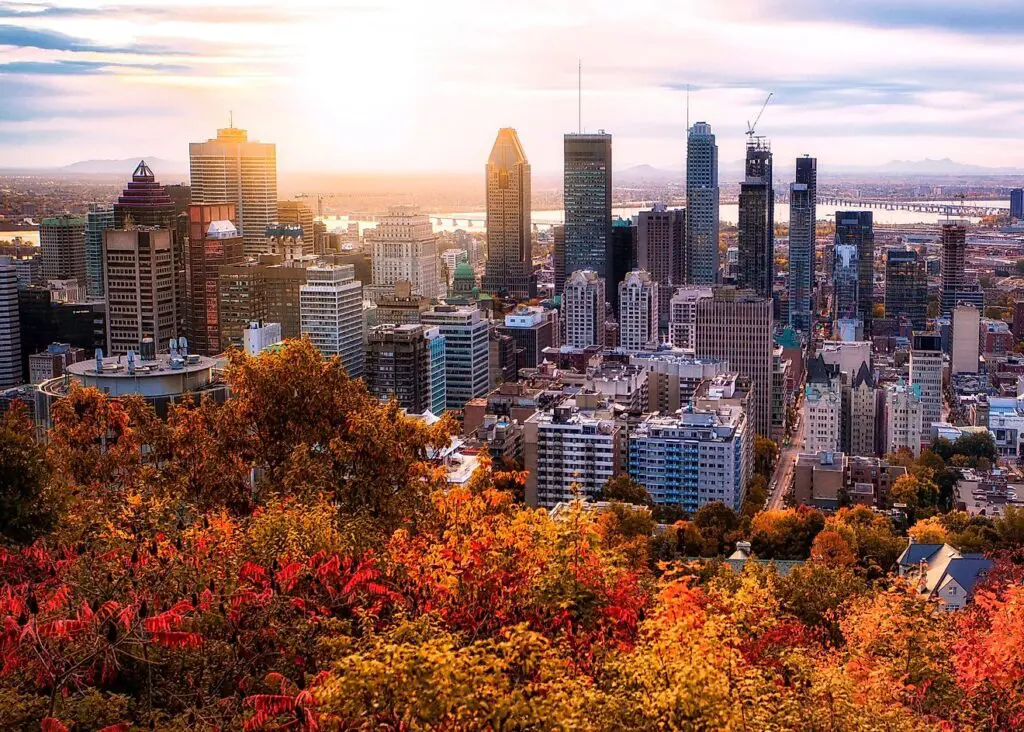
Montreal, one of Canada’s most vibrant cities, has a rich and fascinating history that dates back thousands of years. From its Indigenous roots to its role as a major economic and cultural hub, the city has undergone remarkable transformations. As the largest city in the province of Quebec, the City serves as an exciting canvas reflecting both its rich history and dynamic future. As one of the most multicultural cities in Canada, Montreal’s evolution has been shaped by various factors including cultural diversity.
Early Indigenous Settlements
Long before European explorers arrived, the area now known as Montreal was inhabited by Indigenous peoples, including the St. Lawrence Iroquoians. They established settlements, such as Hochelaga, which was visited by French explorer Jacques Cartier in 1535.
French Colonization
In 1642, Paul de Chomedey, Sieur de Maisonneuve, founded Ville-Marie, a missionary settlement that later became Montreal. The city quickly grew into a center for the fur trade, attracting settlers and traders from France.
British Rule and Expansion
Following the Montreal Campaign in 1760, the city was surrendered to the British, marking a shift in governance. British immigration contributed to Montreal’s expansion, and by the 19th century, it had become the largest city in British North America.
Industrial Growth and Economic Boom
The opening of the Lachine Canal in 1825 spurred industrial growth, making Montreal a key player in Canada’s economy. The city was briefly the capital of the United Province of Canada from 1844 to 1849 before Ottawa took over.
Name Meaning
The name “Montreal” originates from Mount Royal, or Mont-Royal, a prominent hill in the city’s center. French explorer Jacques Cartier, who visited the area in 1535, named the peak after describing it as “a mountain or hill of beautiful and remarkable shape.”
Growth of Montreal
In the 19th century, Montreal’s importance grew as the fur trade, shipping and textile industries flourished. Its strategic location at the crossroads of numerous railroads and canals leading to the rest of Canada and the United States of America allowed it to serve as a major economic and transportation hub, handling vast quantities of trading goods and melee weaponry, such as American swords.
Lachine Canal
Completed in 1825, Montreal’s Lachine Canal provided a crucial transportation link by allowing ships to bypass the dangerous Lachine Rapids on the St. Lawrence River. As of 1959, it was still serving customers and is now recognized as a Canadian National Historic Site.
Sudden Rise of Population
A surge of migrants significantly contributed to the city’s population growth and status. Montreal’s population exploded towards the turn of the 20th century, partly due to an influx of newcomers from Europe. The city’s population increased from 267,000 in 1901 to 588,000 in 1911, a growth of over 100%.
First High-Rise Building
Montreal saw the construction of its first skyscrapers in the late 19th century, which still stand today. Located in the heart of the city, the eight-story New York Life building was easily accessible by elevator, allowing a steady stream of visitors to the top floor to view the city’s landmark clock tower. The Royal Trust and Duluth buildings, which reached heights of 10 floors, followed the New York Life building.
Modern Development and Cultural Influence
Under the visionary and stead-fast leadership of Mayor Jean Drapeau, Montreal continued to thrive, hosting major events such as Expo 67 and the 1976 Summer Olympics, which cemented its international status. Today, it remains a dynamic metropolis known for its diverse culture, thriving arts scene, and strong economic presence. Montreal’s history is a testament to resilience, innovation, and cultural richness. Whether exploring its historic Old Port or enjoying its modern attractions, the city’s past continues to shape its future. Indigenous peoples, European explorers and successive waves of immigration from all over the world have all left their mark on the city of Montreal throughout history, making it what it is today.
World’s Fair
Expo 67, also known as the 1967 World’s Fair, took place in Montreal. This massive global event celebrated Canadian culture, history, innovation and creativity. The fair attracted millions of visitors from around the world, contributing to Montreal’s growing reputation as an international, multiethnic metropolis.
Montreal had the First Olympic Games in Canada
Montreal hosted the first Olympic Games in Canada. While the 1976 Summer Olympics faced turmoil and financial difficulties, they still managed to attract competitors and fans from across the globe. World-class venues like the Montreal Biodome and Olympic Stadium were built specifically for the Games and remain as lasting legacies.
A Night-Life Hot-Spot
For those in tune to the beat of Michael, Gloria, KC, Donna, the Barry’s and the Bee-Gees, the Montreal disco-scene with countless dance clubs like Twelve-Thirty-Four, The-Lime-Light and September’s, rivaled, on this Hemisphere, the likes of New York’s Studio 54, Acapulco’s Baby-O and Florida’s Pete & Lenny’s, Yesterday’s and the Pier 66 Rooftop Revolving Lounge.
Underground Shelter for Harsh Winters
The Underground City, commonly known as RÉSO, comprises approximately 32 kilometres of tunnels and underground malls. Initially constructed in the 1960s as a refuge from the harsh cold, it has since transformed into a popular tourist destination that many people might not be aware of.
Welcoming Bilingual City
Both French and English have been commonly used among Montreal’s population since the days of the Seven Years’ War, reflecting the city’s multilingual status. Montreal is renowned for its high quality of life, warm hospitality and unique culture, which blends aspects of both English and French cultural traditions.
Second Largest French Speaking City
Montreal has been, and still is, the second-largest city with a French-speaking population after Paris, the capital of France. This has been the case throughout history, even before the 20th century, surpassing both Toronto and Quebec City.
The Montreal metro is over 50 Years Old
The Montreal metro stations, the city’s subway system, are widely recognized for their distinctive architecture and design. Surprisingly, the system has been growing since 1966, now encompassing four lines and over 68 stations. So, if you are traveling through downtown Montreal, the island of Montreal or its neighborhoods, you’re using a historical route.
John Lennon wrote “Give Peace a Chance” in Montreal
The Fairmont Queen Elizabeth Hotel has hosted many famous guests, including Queen Elizabeth II, Charles de Gaulle, Fidel Castro, Gandhi, the Dalai Lama and Nelson Mandela. However, the hotel gained global recognition when John Lennon, who had been denied entry to the USA, stayed in Room 1742 and wrote “Give Peace a Chance” there. Eventually, this song became a rallying cry for protesters of the Vietnam War in the United States.
Montreal The Host City
Montreal is North America’s go-to location for international events. The city is home to numerous annual events, including the Just For Laughs Festival, Montreal International Jazz Festival, International Fireworks Festival, Montreal Beer Festival, International Film Festival on Art, Montreal Reggae Festival, International Festival of Circus Arts, Canadian Grand Prix, Blue Metropolis International Literary Festival, and many more.
ΑΚΟΛΟΥΘΕΙΣΤΕ ΜΑΣ